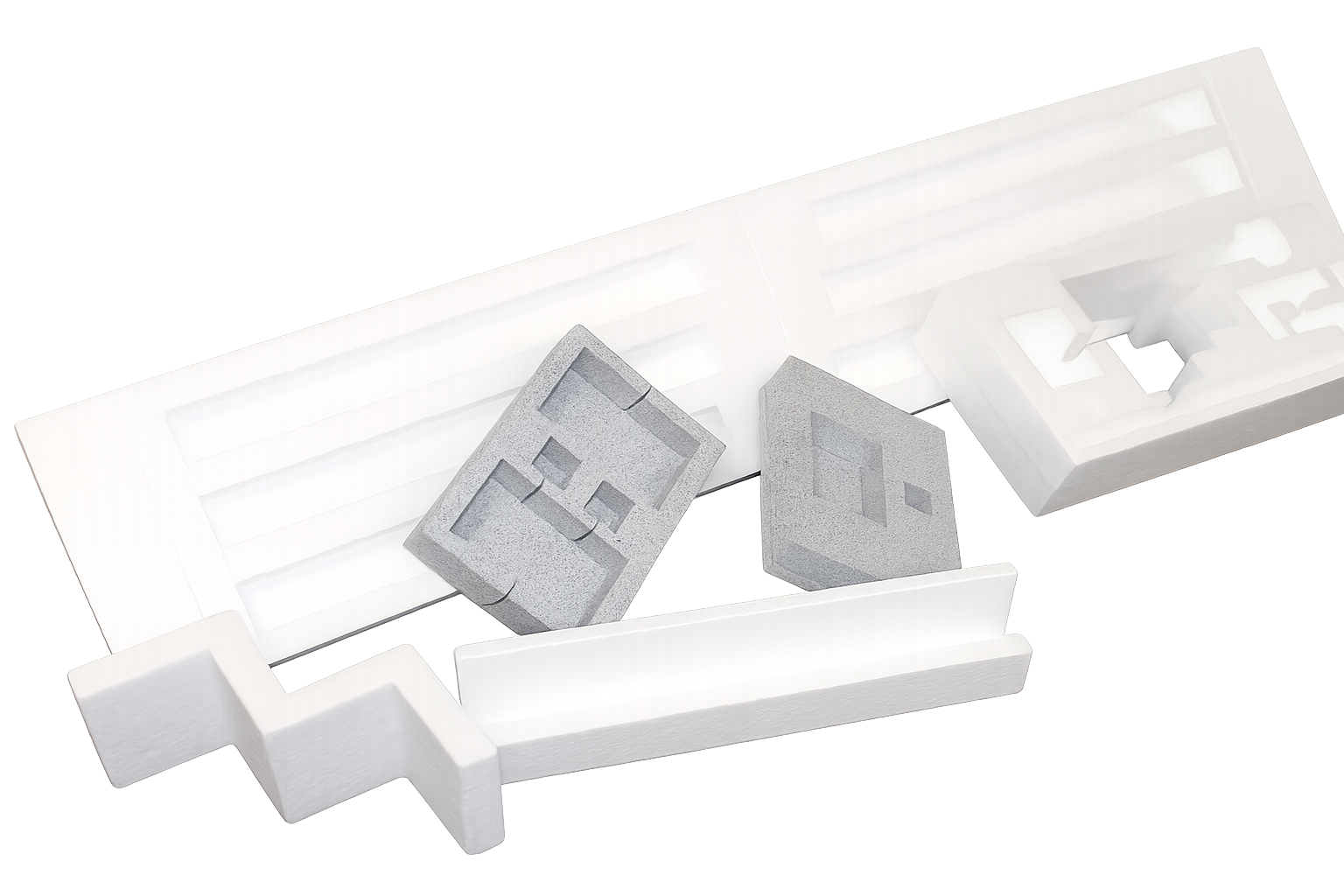
When people hear “expanded polystyrene,” or EPS, they usually think of foam coffee cups or the insulation boards used in home construction. And yes, EPS has been a standard in the building industry for decades because of its thermal performance and moisture resistance. But there is another side to this material that doesn’t get as much attention. The same closed-cell structure that makes EPS a great insulator also makes it an outstanding material for protective packaging and that is where a lot of the real-world problem-solving happens.
A Company Built Around the Material
A South Dakota manufacturer since 1988, Benchmark Foam has played an active role in the evolution of how and where EPS is used, well beyond construction applications. While we still supply EPS for roofing systems, under-slab insulation and geofoam, a significant part of our work involves custom-molded packaging. We design and manufacture protective solutions for products that range from medical devices and electronics to industrial components and temperature-sensitive shipments.
Why EPS Works for Protection
The reason EPS works so well for packaging comes down to its physical properties. Because the material is about 98% air, it’s light enough to reduce shipping costs and the structure also effectively absorbs energy. When a package gets dropped or bumped during transit, the foam compresses and dissipates the force before it reaches the product inside.
That is the basic principle but the real trick is getting the fit right. Generic packaging materials like loose fill or cardboard inserts leave room for movement and movement leads to damage. Custom-molded EPS eliminates that problem because it can be shaped to the exact contours of the product. It holds everything in place and distributes pressure evenly across the surface.
Adjusting Density and Design for Different Needs
One of the advantages of our process is that we can adjust the density of the foam depending on what the product needs. A lightweight consumer good might only need low-density foam, while a heavy industrial part or a sensitive piece of medical equipment might require a higher-density material with more compressive strength. We can also design multi-part packaging systems. Two-piece clamshells, modular inserts with separate compartments or interlocking layers that keep different components organized. The flexibility is remarkable and we often work with clients who have oddly shaped products that no off-the-shelf packaging could accommodate.
Keeping Temperature-Sensitive Shipments Safe
Temperature control is another area where EPS shines. The same insulating properties that keep heat from moving through a wall also keep temperature-sensitive shipments stable. We produce thermally insulated coolers and shipping containers that help maintain consistent temperatures for pharmaceuticals, food products and other goods that can’t tolerate extreme heat or cold. This isn’t a secondary benefit. For some clients, it is the primary reason they choose EPS over other materials.
The Environmental Picture
There is the question of environmental impact of course. EPS is 100% recyclable and many facilities (including ours) use recycled content in production and participate in programs that keep used foam out of landfills. The lightweight nature of the material also reduces fuel consumption during shipping, which lowers the overall carbon footprint compared to heavier alternatives. We have also developed products like eps360®, an insulation board made from 100% recycled EPS and we continue to look for ways to improve material efficiency without sacrificing performance.
What Sets a Good Manufacturer Apart
What sets a reliable EPS foam manufacturer apart isn’t just the ability to mold foam, but the ability to solve problems. At Benchmark Foam, we start by analyzing the specific risks a product faces during transit, whether that is shock, vibration, temperature fluctuation or movement within the package. Then we design, test and refine a packaging solution that addresses those risks. Sometimes that means a simple block of foam with a cutout. Other times it means a complex multi-piece system that has to fit within a specific shipping container and meet stringent industry standards. We have done both and we have learned that each project has its own set of requirements.
Looking Beyond the Obvious
So when you think about EPS, think about more than insulation. Think about the protective packaging that keeps medical devices sterile, electronics intact and fragile components safe across thousands of miles. That is the other side of the foam and it is where a lot of the innovation happens.