Walk into a house with forced air heat on a cold morning. The furnace kicks on. Air blows out of the vents, but the floor stays cold. Your feet feel it. The room temperature bounces up and down as the system cycles on and off.
Now walk into a house with radiant floor heat, where the warmth comes from the floor itself with no drafts or cold spots. The temperature holds steady and that is the difference between forced air and radiant heating.
Why Forced Air Falls Short
Forced air systems blow heated air through ducts and out of vents and send warm air rising toward the ceiling. What you get is a room that feels warm at head level but stays cool near the floor. Heat escapes through the ceiling, so the furnace cycles frequently have to keep up. Dust and allergens get pushed around the house every time the fan runs and when the furnace turns off, the space starts cooling down right away.
How Radiant Heat Works Better
Radiant floor heating warms the mass of the floor itself. That warmth radiates upward evenly across the whole room. The heat stays where people actually are. Because the floor holds temperature, the system does not need to cycle on and off constantly.
Radiant heat also works with lower water temperatures than forced air needs. That makes it a good match for modern condensing boilers, heat pumps and solar thermal systems.
The One Catch with Radiant Heat
Radiant floors work best when the tubing sits in the right spot. If the pex tubing ends up too low in the slab, it causes delayed response times. If the tubing moves out of place during the concrete pour, you end up with uneven heating. And if the tubing spacing is not consistent, some parts of the floor stay warm while others feel cold.
That is where the installation method matters.
Thermo-Snap’s® Role in Radiant Systems
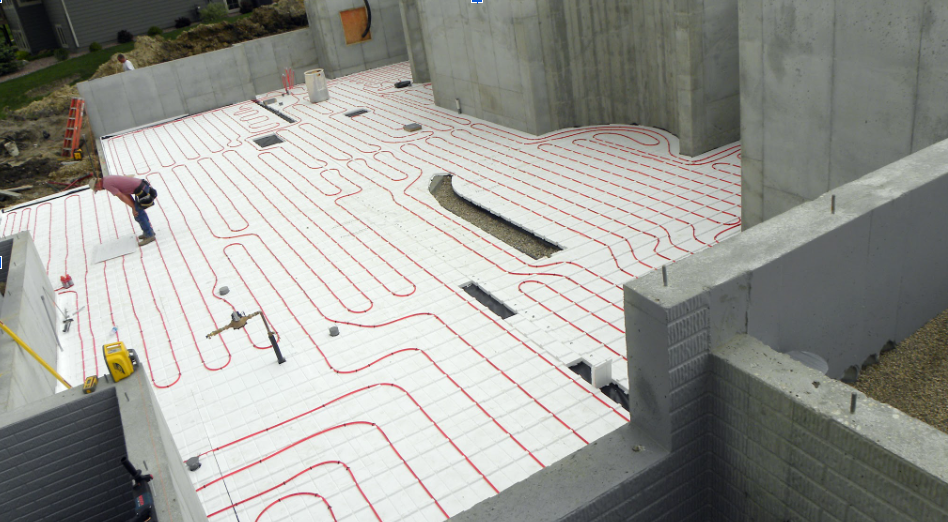
Thermo-Snap® holds pex tubing exactly where it belongs. The panels come with a built-in tube management system that locks the tubing in position, making installation a breeze. No zip ties. No wire mesh. No measuring out spacing by hand. The panels keep every run of tubing evenly spaced so the whole floor heats the same way.
When the concrete truck shows up, Thermo-Snap’s® patented tube management system securely holds the pex tubing. What you get is a heating system that works exactly the way it was designed to work.
The Bottom Line
Forced air moves heat around. Radiant floor heat starts from the ground up. If you want steady warmth, lower energy use and a system that does not blow dust through your house, radiant is the better choice. And if you want that radiant system to go in without trouble and perform for years, Thermo-Snap® gives you a straightforward way to get there.
Benchmark Foam manufactures Thermo-Snap® panels for basements, garages, workshops, driveways and walkways. Contact our team to discuss your next radiant heating project.