You feel it the moment you step onto the surface. There is a quiet, even warmth that starts at the soles of your feet and moves up. In-floor heat has a way of making a room feel comfortable in a way that forced air never can. No drafts. No noisy registers. Just a gentle, steady temperature that makes a house feel like a home.
But here is something a lot of people don’t see. That wonderful warmth on the surface of your floor depends almost entirely on what is happening underneath it. The tubing carrying the warm water might get all the attention, but the insulation beneath that tubing is what makes the system work the way it should.
The Direction of Heat and the Thermo-Snap® Difference
Heat seeks the path of least resistance. When hot water moves through an in-floor heat system, that heat wants to go everywhere. It wants to go up into the living space where you want it. But it also wants to go down into the subfloor, the joists or the concrete slab below.
Without something to stop it, a good portion of the energy you pay for ends up heating the ground underneath your house or the crawl space air. That is wasted money and a system that struggles to reach the right temperature.
This is why insulation is not just an add-on. It is the difference between a floor that delivers comfortable warmth and a floor that leaks energy every minute the system runs.
What Makes Insulation Work
The job of insulation in a hydronic system is straightforward. It needs to reflect heat back up toward the living space. It needs to create a barrier that stops thermal energy from escaping downward. And it needs to hold up over time without settling, shifting or losing its shape.
Expanded Polystyrene (EPS) foam has proven itself as a material that does this job well. It offers consistent resistance to heat flow. It does not break down when exposed to moisture. And it provides a stable base for the tubing that carries the warm water.
The Installation Difference
The layout of the pex tube in an in-floor heat system is critical. If tubing shifts during the pour, if it floats up in the concrete or if it ends up at different depths across the room, the heat output changes from one spot to the next.
This is where the design of the insulation panel makes a real difference in the final result.
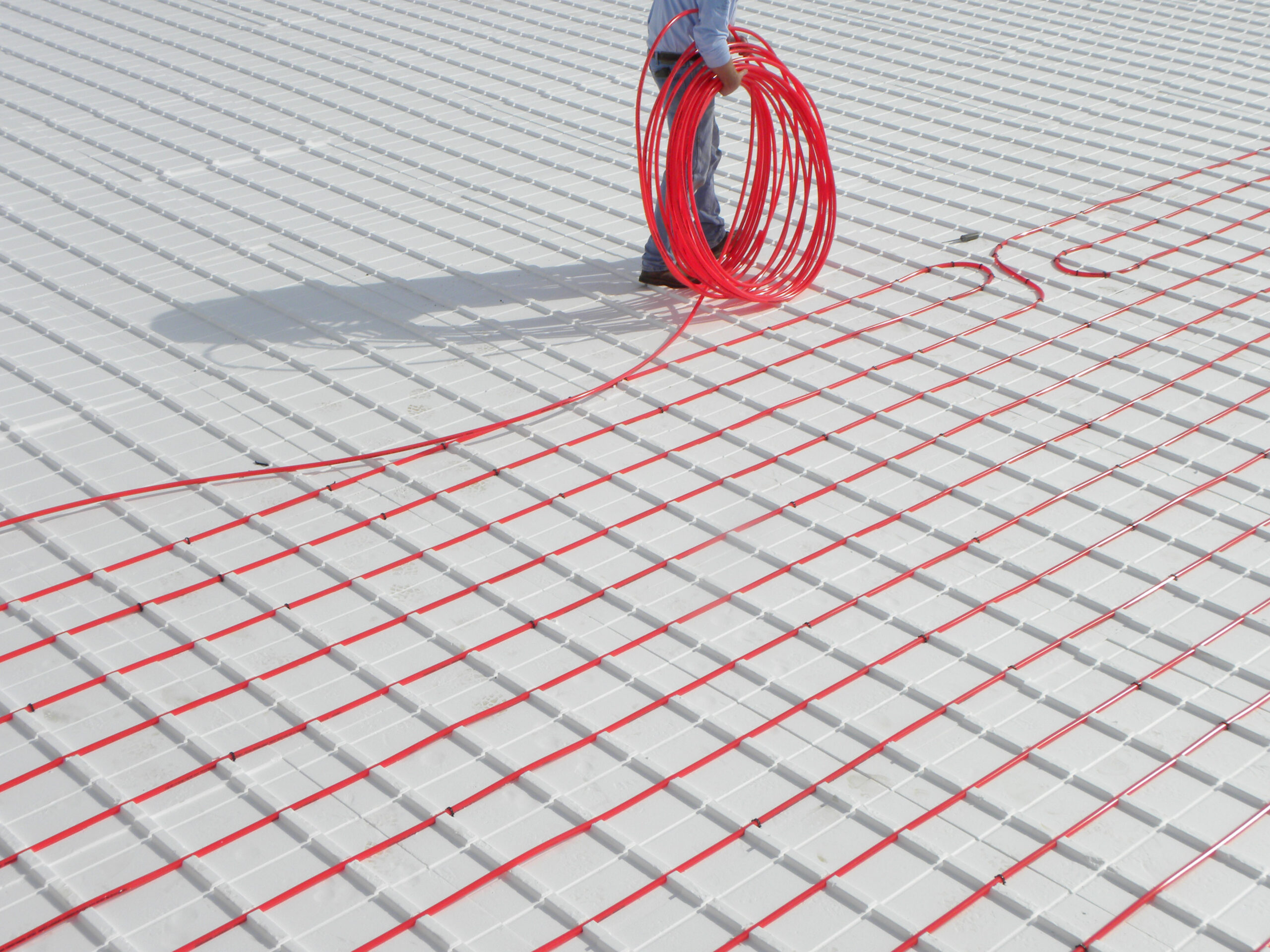
Benchmark Foam developed Thermo-Snap® to solve this problem. The panels come with grooves that hold the pex tube firmly in place. The tubing snaps in and stays put. This means the spacing stays consistent. The depth stays consistent. The installer knows exactly where every inch of tubing sits before the concrete ever touches it.
Material Matters
The panels themselves are made from EPS foam. This material has been used in construction for decades because it does what insulation is supposed to do. It resists heat flow. It does not absorb water. It does not rot or grow mold. And it keeps doing its job for the life of the building.
When you pair good material with a design that makes installation simple, you remove a lot of the variables that lead to problems down the road.
Real World Performance
A hydronic system with proper insulation responds faster when the thermostat calls for heat. The energy input goes into warming the floor rather than heating whatever sits below. Rooms reach temperature sooner. The boiler or heat source runs less often. And the people living in the space enjoy consistent comfort without thinking about how it all works.
For commercial buildings, the math works the same way. Large floor areas mean large heat loss if the insulation is not there. Putting the right panels under the tubing pays for itself over time through lower energy bills and happier occupants.
The Bottom Line on Insulation
Skipping good insulation to save money upfront leads to higher operating costs. Whether you are building a new house or retrofitting an existing space, the insulation layer deserves attention. It is not the most visible part of the job. But it might be the most important.