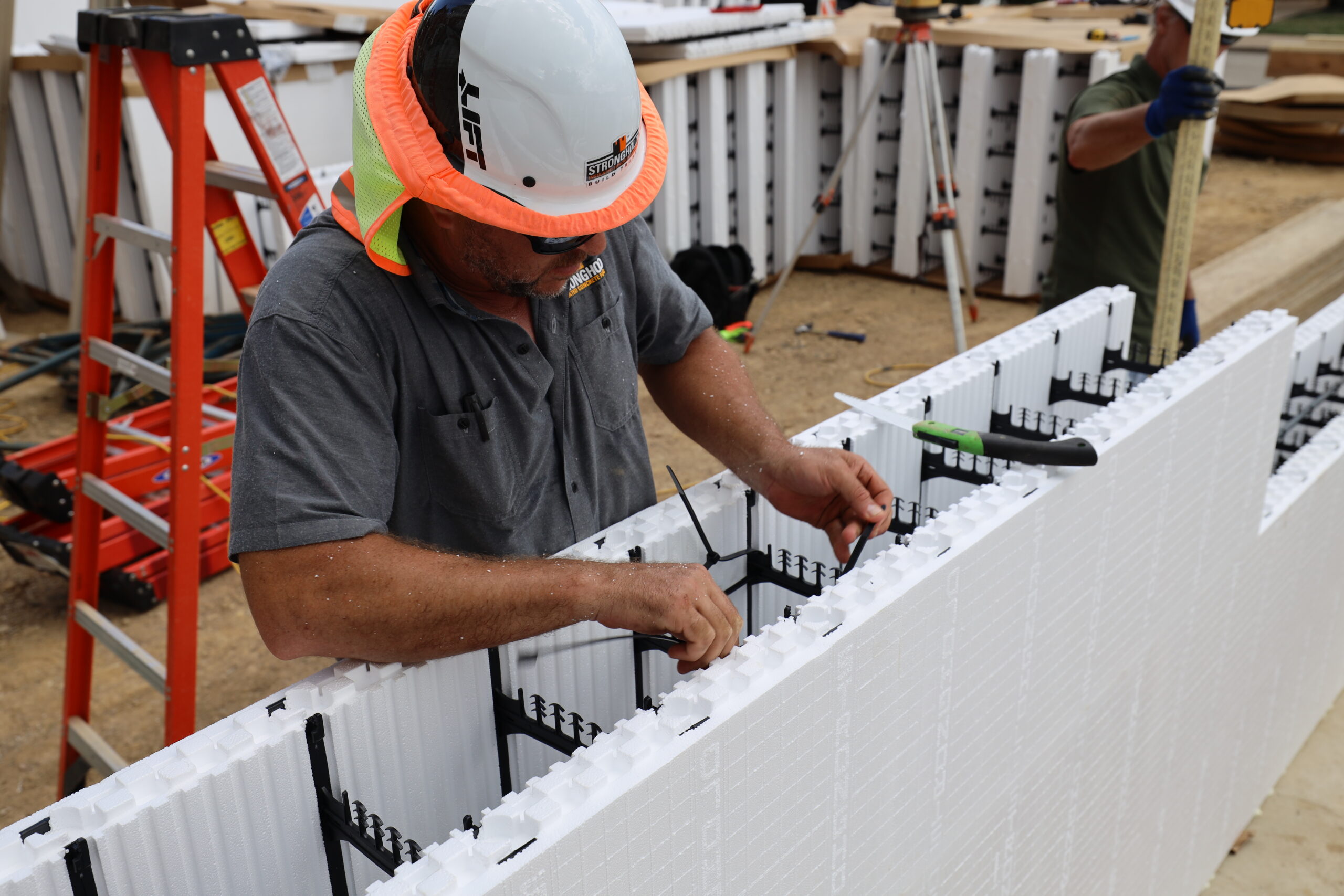
Architects, builders and homeowners choose insulated concrete forms (ICF) for a reason. It may be the energy efficiency, solid concrete walls or the sound dampening, but whatever the reason, the finished product requires a solid pour that sets up right the first time.
Here’s where we see insulated concrete forms installation go sideways and how to sidestep the trouble before concrete ever hits the truck.
Mistake #1 – Planning Around the Daytime High Instead of the Overnight Low
This one burns builders every spring. The sun comes out, jackets come off and everyone assumes the weather has turned. Then the temperature drops after dark and that fresh pour takes a hit. Concrete gains strength through hydration and hydration slows to a crawl in cold conditions. If the temperature dips below freezing before the concrete has gained sufficient strength, you’re looking at surface damage, cracking or worse.
The fix is simple: check the 48-hour forecast and pay attention to overnight lows. If those numbers flirt with 32°F, cold-weather precautions still apply. No matter how warm it feels at 2:00 p.m.
Mistake #2 – Pouring On Frozen Ground
Spring thaws can be deceiving. The top layer of soil might look ready, but frost can linger below the surface. Pouring concrete onto frozen footings or subgrades creates a bond issue. The concrete won’t grab the way it should and you’re setting yourself up for movement down the road.
Before the truck backs in, check that footings, slabs and the ground beneath your forms are fully thawed and dry. If there’s frost, wait. A day of patience beats years of foundation trouble.
Mistake #3 – Skimping on Bracing for Tall Walls
Tall walls are a different animal and the pressure from wet concrete is real. Some crews try to get away with minimal bracing and think the forms will hold on their own. They won’t. Tall walls need a proper bracing system. The kind designed to handle lateral pressure and keep walls plumb and square.
Invest in good bracing. Set it up right. Check it before the pour. And if you’re going above 4 feet, pour in lifts. Keeping it to 4-foot increments at a time reduces stress on the forms and gives the concrete a chance to settle without bulging.
Mistake #4 – Ignoring the Mix Design
Not all concrete is the same and ICF walls demand a specific mix. Too much aggregate and the concrete won’t flow around rebar and ties. Too wet and you risk segregation. The sweet spot is a slump between 5 ½ and 6 ½ inches with aggregate no larger than ⅜ inch. If you’re pouring in cold weather, talk to your ready-mix supplier about early-strength options or non-chloride accelerators. Small tweaks to the mix make a big difference when temperatures fluctuate.
Mistake #5 – Skipping Internal Vibration
You can’t just dump concrete into the forms and walk away. Without vibration, air pockets get trapped around rebar, ties and bucks. Those voids become weak spots. The standard is to vibrate every 18 to 24 inches as you go. But don’t overdo it. Too much vibration can cause the forms to bulge or blow out. Watch the walls as you work and back off if you see swelling.
Mistake #6 – No Blowout Plan
Blowouts can happen and it’s best to be prepared. A seam gives way, a brace slips or pressure builds faster than expected. The crews who handle it best are the ones who always plan for it. Keep repair materials on site – foam, screws, straps, extra bracing. If something goes wrong, stop the pour, fix it and then move forward because trying to push through usually makes the mess worse.
Mistake #7 – Forgetting to Protect Exposed Concrete
Even with the insulating properties of ICF, exposed areas still need attention. The tops of walls, window and door openings and ledges are vulnerable when temperatures drop. Insulated blankets or heavy tarps should be on site before the trucks arrive, not after. Cover exposed concrete immediately after placement, especially if overnight lows are forecasted to dip.
Mistake #8: – Rushing the First 48 Hours
The first two days after a pour set the stage for everything that follows. This is when concrete gains its early strength. Loading walls, backfilling or stripping forms too soon can undo all the work you put in. Monitor curing temperatures. Let the material do its job. A little patience here pays off in walls that hold up for decades.
Get It Right the First Time
ICF construction takes a bit more planning than stick framing, but the results speak for themselves. Strong walls, steady temperatures and fewer callbacks. The crews who nail the details – who check the overnight forecast, brace properly and pay attention to the mix – are the ones who walk away from the job site knowing it’s done right.